
RamAI
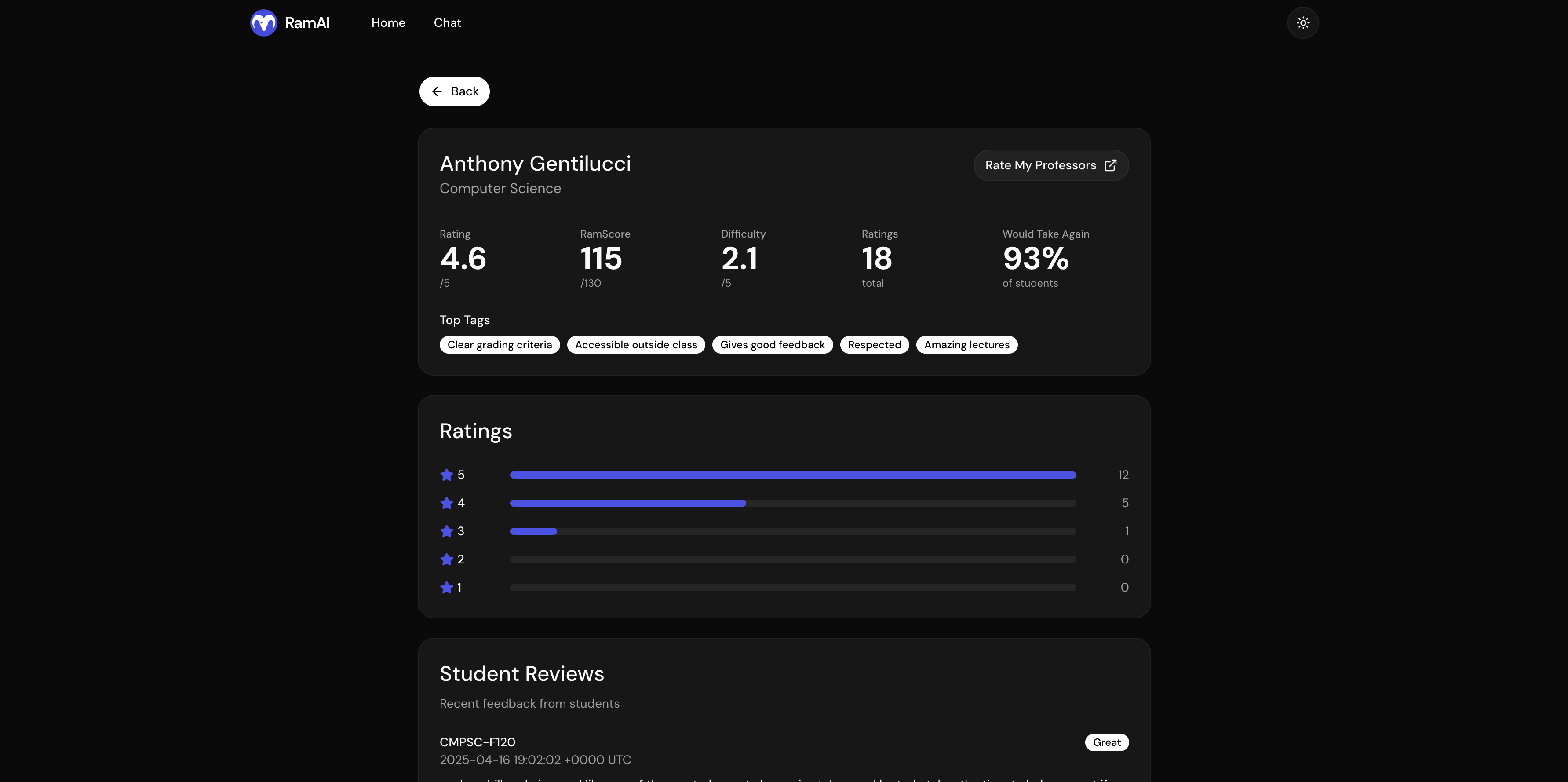
A specialized AI-powered assistant designed to provide Suffolk University students with grounded academic guidance and comparisons of professors based on data and review evidence.
Tech Stack
 TypeScript
 Python
 JSON
JSON Data Engineering
 AI Integration
 Auditing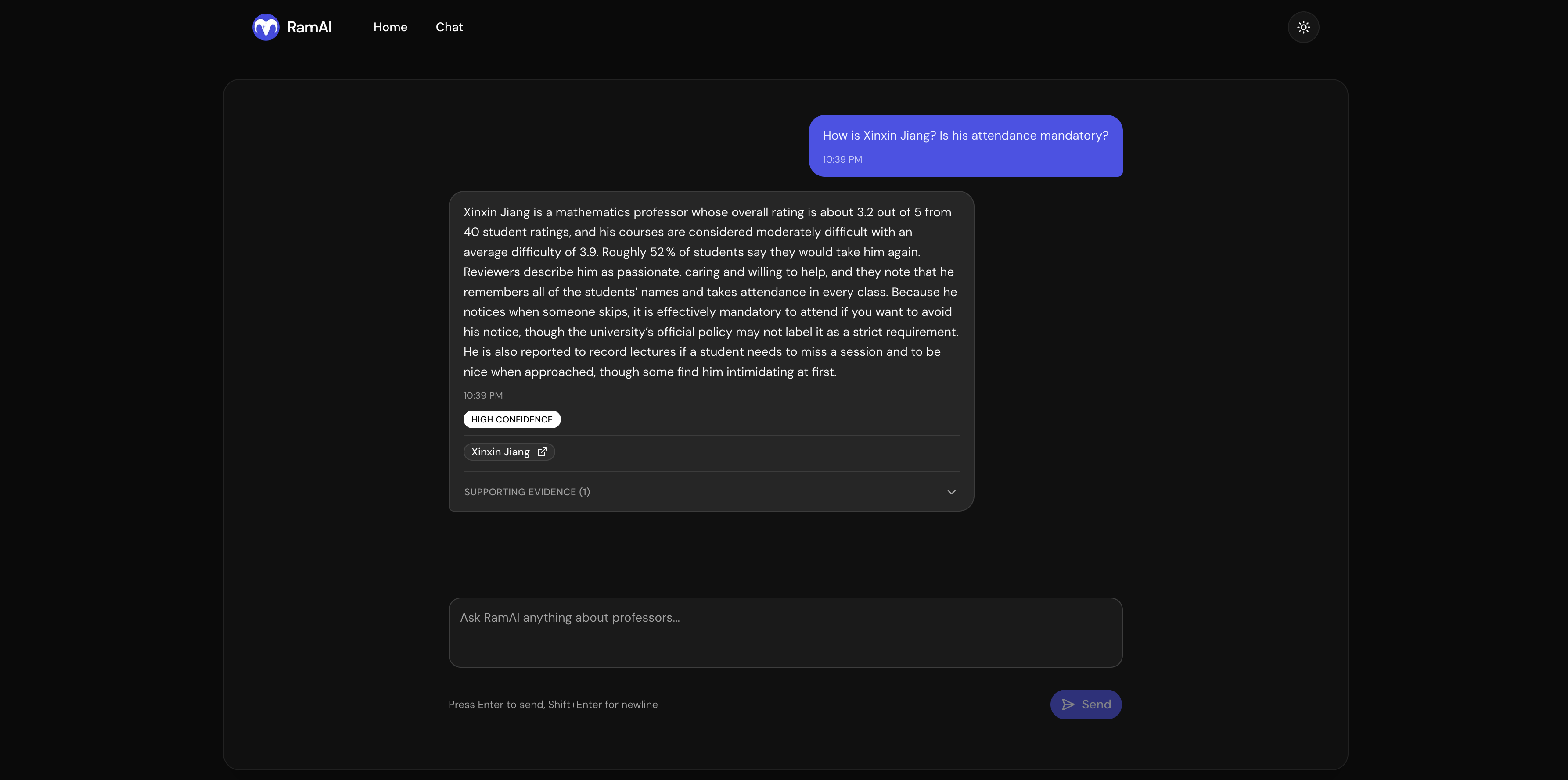
Problem
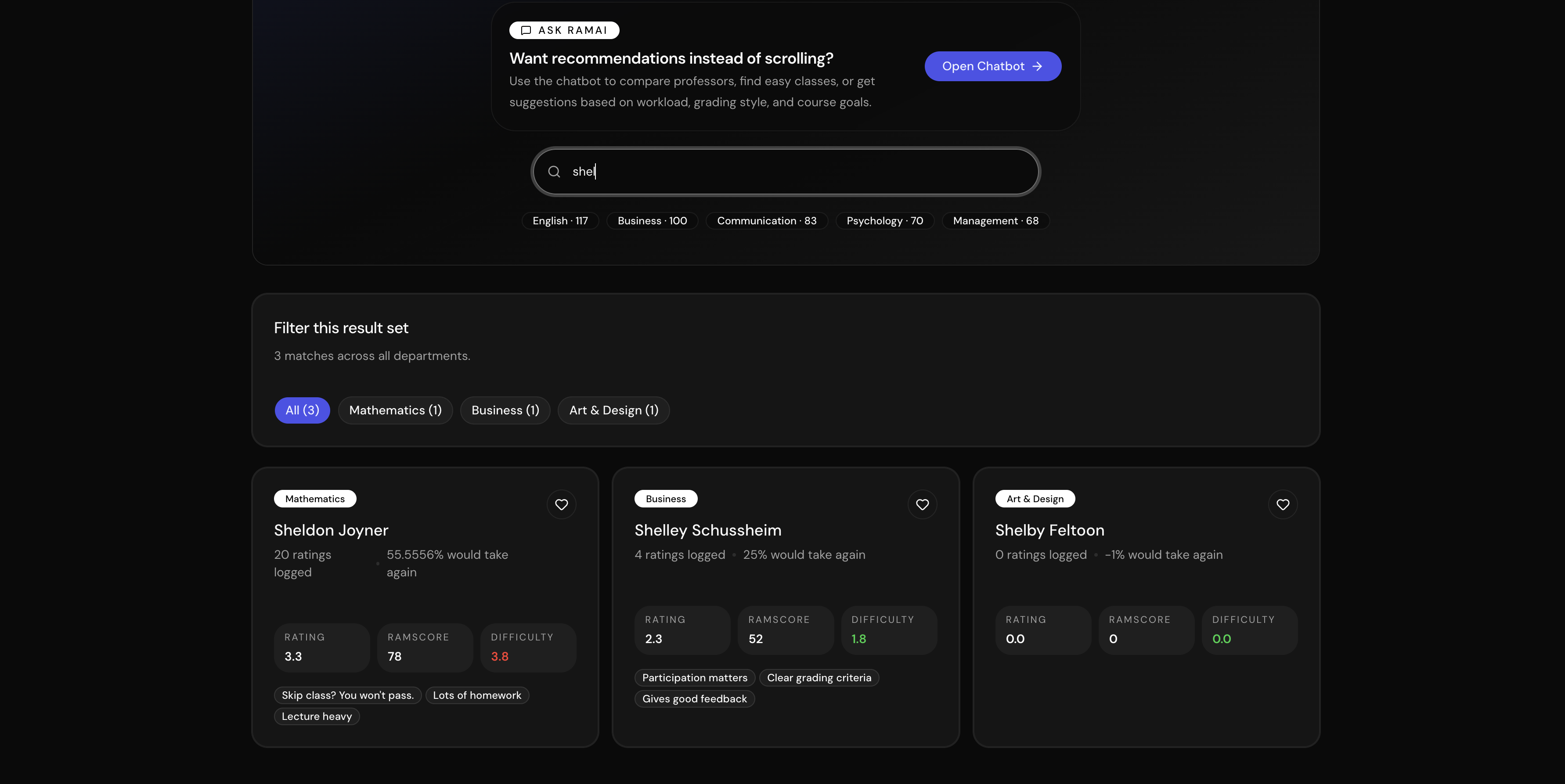
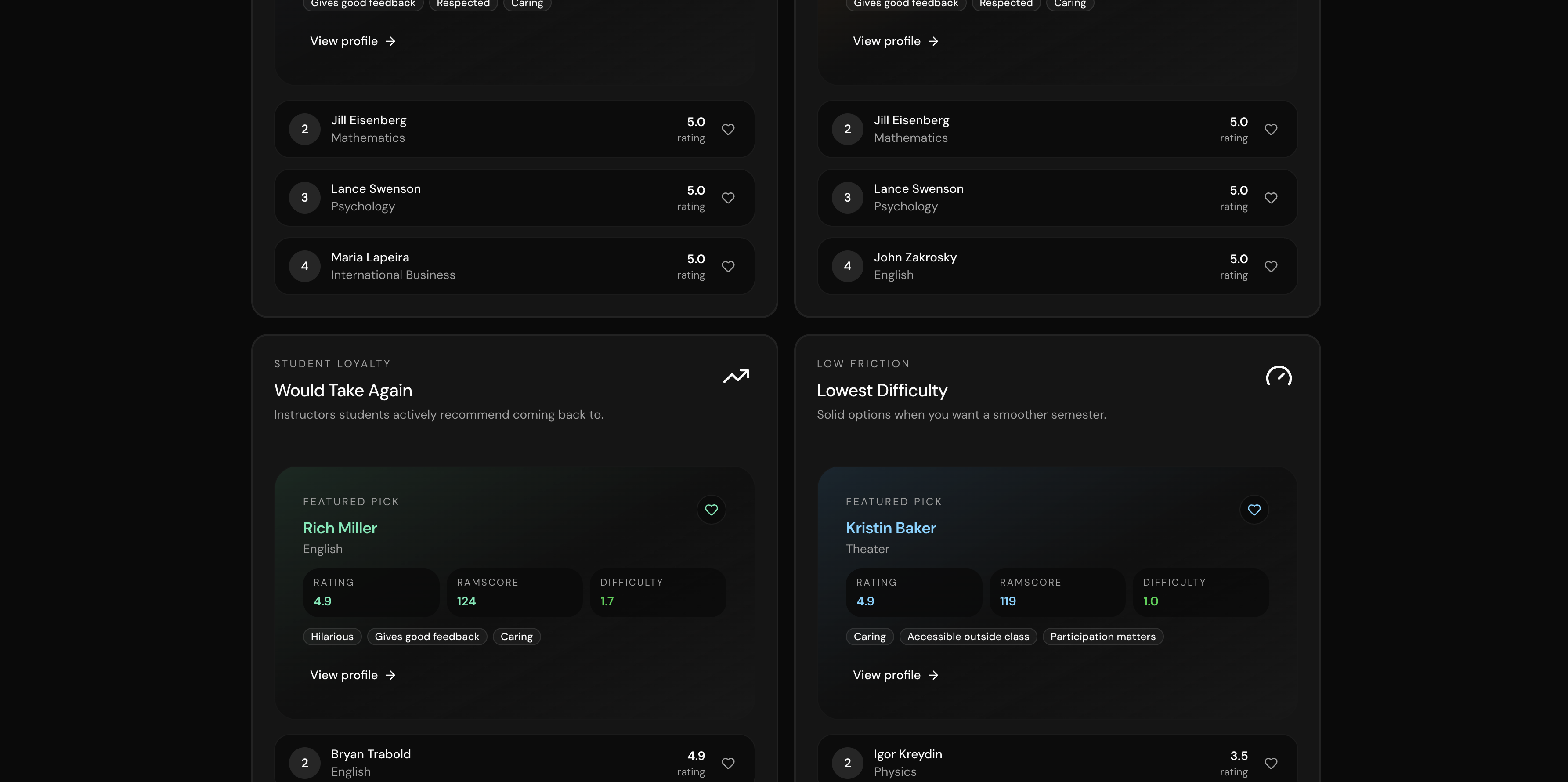
When trying to find an answer to a question about professors at Suffolk University, scrolling through pages of professor information and reviews can be time consuming. Especially when time is limited, like when you're registering for classes and trying to decide between professors, it can be hard to find the information you need quickly.
Key Features
Challenges
Context Bleeding
The AI would carry over department or trait context from earlier messages and use it to silently block valid matches in the current query. Fixing this required carefully scoping what state persists across turns and what gets reset per message.
Brittle Name Matching
Stray spaces, punctuation differences, and partial names were enough to make the AI claim a professor didn't exist when they were right there in the data. Robust fuzzy matching and text normalization had to be built into the retrieval layer.
Groundedness vs. Helpfulness
Balancing a cautious, evidence-bound AI against one that feels genuinely useful required careful prompt engineering. The AI needs to acknowledge thin or missing evidence without becoming unhelpfully evasive.
Data Representation
Handling edge cases where users ask questions not well-represented in the dataset required careful consideration of how the AI should respond responsibly.
Tradeoffs
Router vs. Strict Intent Planner
The original strict intent classifier was replaced with a lightweight router that decides between direct answers and grounded lookups. This is far more flexible for natural queries, but requires the system to manage much richer data retrieval before a response is drafted.
Richer Retrieval, More Complexity
Feeding the AI individual review snippets, course aggregates, and tags gives it real grounding but makes the retrieval pipeline significantly more complex than the original thin-summary approach.
Caution Over Confidence
The AI is tuned to be explicit when evidence is thin or contradictory rather than filling gaps with inference. This prioritizes trust and accuracy at the cost of occasionally less decisive answers.
Sourcing Data
RateMyProfessors remains the primary data source due to its comprehensive coverage and user-generated reviews. This means the data may carry biases and may not always be current, which is a known tradeoff.
Storing Data in JSON vs Database
JSON was chosen for its simplicity and flexibility for this project's scale. While a database would offer more robust querying, JSON remains a lightweight solution that meets the application's current requirements.
Outcome
The application has been deployed and was tested and used by students with positive feedback since they found it useful. The project provided valuable experience in AI integration, backend engineering, data engineering, and building user-centric applications.
Dev Blog
January 15, 2026
Inception
Actually, this is the start of the blog for this project. I started planning the actual project a few days ago. I suppose the reason for starting this app in particular was because I was interested in creating my first AI integrated application. But I also wanted something that Suffolk University students could potentially use.
Right now, I've already started building the app, after a day or two of planning the architecture and determining the tech stack. I've always had the bad habit of creating the name and logo of applications early, but wow, that part is really fun.
But enough of that, here's what I've done so far:
I'll continue working on this in my free time, and I'll post updates here as I make more progress.
— Montasir
End
Latest
You are on the latest project
Next
MPS
August 2021 — December 2023